


OpenMolding Packaging Technology
OpenMolding is an advanced packaging technology featuring an open-window design. While it uses the same base materials as traditional LGA (Land Grid Array) packaging, the key difference lies in its unique structural configuration and process. OpenMolding protects the delicate chip bonding wires while fully exposing the chip’s sensing area. In contrast, conventional LGA packaging encapsulates the entire chip, including the sensor area, with molding material.
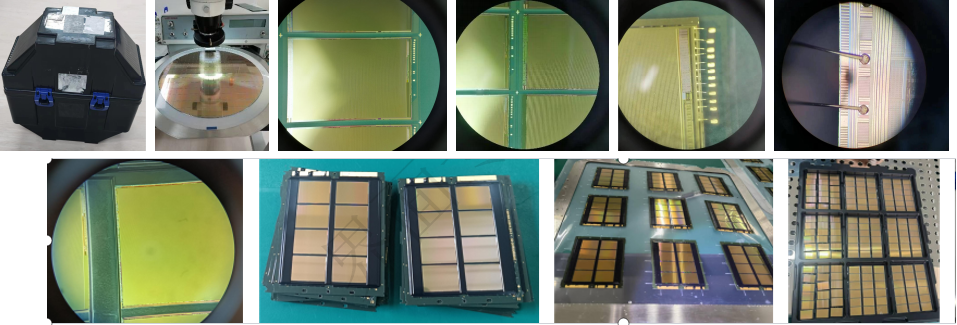
This innovation results in fingerprint identification chips with significantly enhanced sensing sensitivity and superior pattern clarity, all while maintaining the high reliability and robustness associated with LGA packaging.
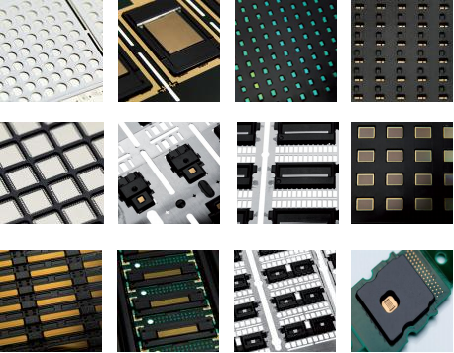
The OpenMolding process leverages a window encapsulation technique, also known as Film-Assisted Molding (FAM) technology. This method uses a dual-membrane mold with pneumatic-assisted inserts—an innovative design that enables the precise creation of both the open window and the surrounding cavity structure. It is especially well-suited for packaging sensor chips that require direct interaction with the external environment. This foundation also supports the integration of complete sensor module systems.
One of the key challenges in OpenMolding is balancing protection and exposure: the process must encapsulate and safeguard fragile wire bonds while ensuring the sensing area remains unobstructed. This requires early-stage co-design of the chip layout and packaging. Specifically, the positional relationship between the solder pads and the sensing zone must be optimized to meet both packaging constraints and maximize wafer utilization.
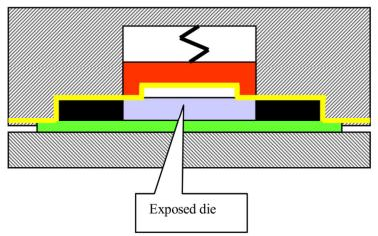
To achieve this, custom-designed molding tools are developed for each chip layout. The packaging process also demands high-precision die bonding, precise alignment of mold-release films, and carefully controlled molding parameters. These measures ensure chip integrity, prevent defects such as voids, plastic overflow, or seal damage, and maintain the performance and appearance of the sensing area.


